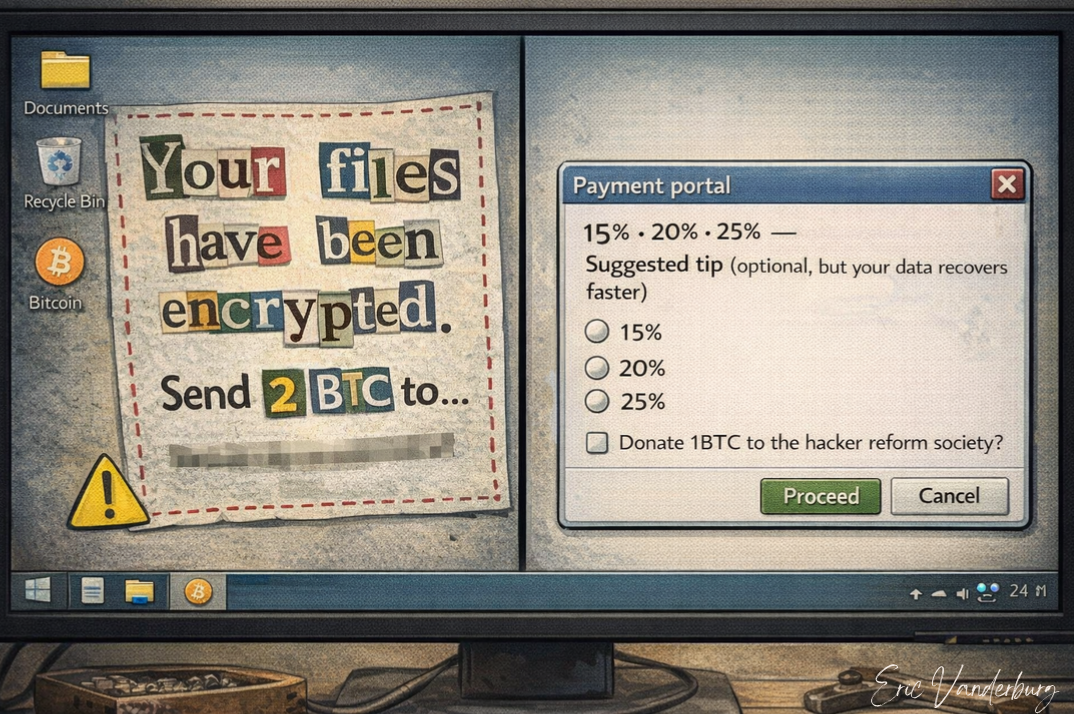
Ransomware Tip
Tipping was never supposed to be this way. It started as a small thank-you for exceptional service — a few extra bucks for the waiter who remembered your drink order or the bartender who stayed late. Now it’s a guilt-driven surcharge baked into every transaction, regardless of service quality or logic. What’s next, tipping my ransomware extortionist?
The problem is threefold. First, the screens with preselected percentages (20%, 25%, 30%) are psychological traps — most people don’t want to look cheap in front of another human, so they pay more than they should for less service than they received. Second, employers have shifted wage responsibility onto customers, using tips to subsidize low base pay even in roles that never traditionally received them. Third, tipping has spread to places it doesn’t belong: retail pickups, counter service, even self-checkout kiosks where no human is involved.
What makes it an epidemic is how quickly we’ve normalized it. Five years ago, tipping a cashier was absurd. Today, it’s awkward not to. The screens are everywhere — coffee shops, takeout windows, online orders, even doctor’s offices in some cases. There’s no standard anymore, just constant pressure to pay extra for the basic completion of a transaction.
Worse, tipping ahead of service has inverted the incentive. A tip was supposed to reward good service. Now you’re expected to pay upfront for service you haven’t received, removing any reason for the provider to actually try. And if you tip low? You risk cold food, slow delivery, or that silent judgment from across the counter.
The only real solution is to roll tipping back to its original purpose: sit-down restaurants with waitstaff, bars, and maybe delivery after the fact. Everything else should just charge what it costs. But until then, customers are left staring at a screen, feeling like a villain for pressing “No tip” on a muffin they fetched themselves.
Discussion ¬