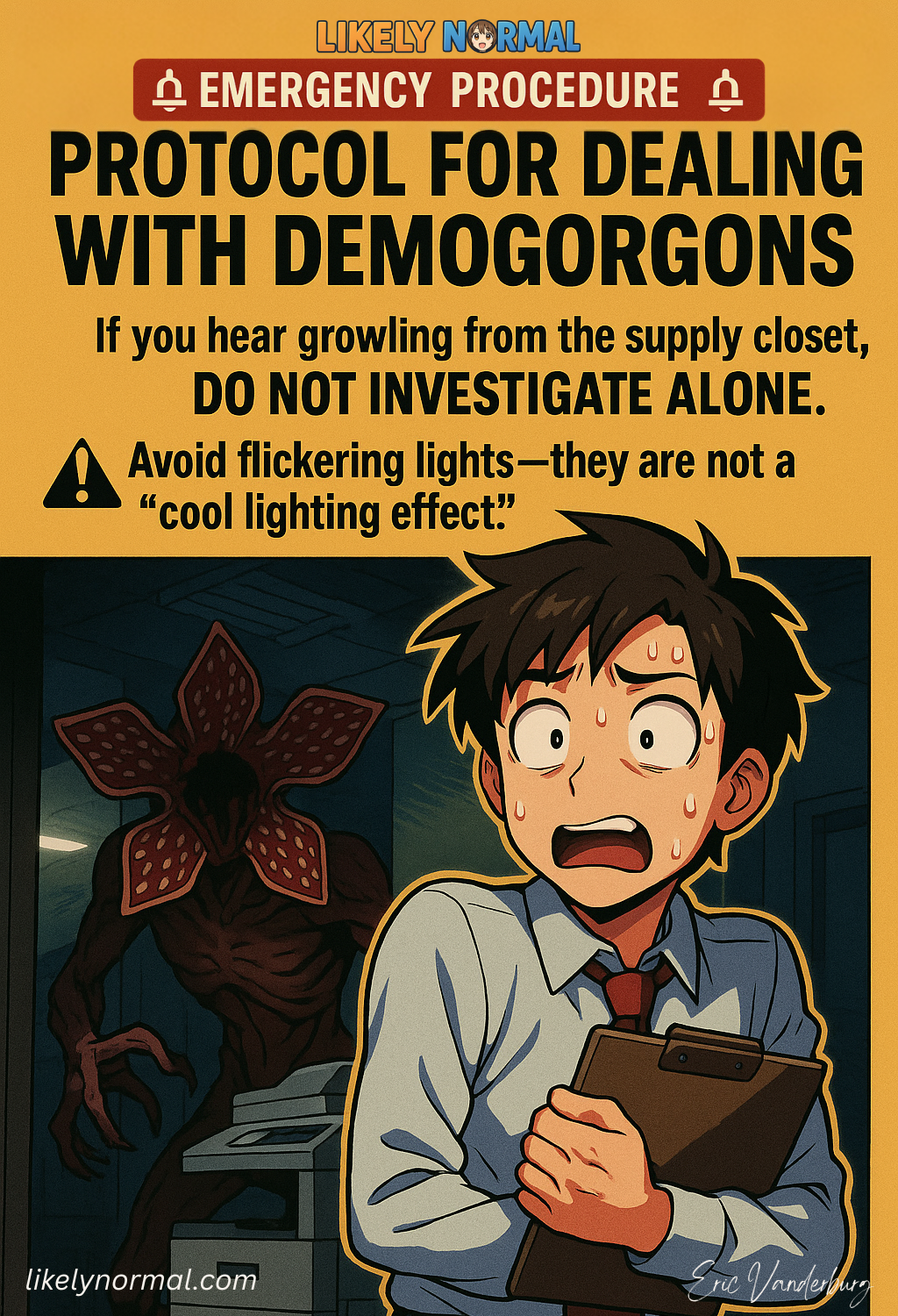
Demogorgon Emergency Procedure
Do you know those OSHA posters? The fluorescent-lit, jargon-filled masterpieces that hang in every break room, clinging to the wall like a motivational speaker at an unpaid internship conference. It’s the one piece of workplace decor that screams, “You have rights! (But good luck remembering them while you’re crying in the supply closet.)”
Let’s be honest: Nobody reads the OSHA poster. Oh sure, it’s technically required by law, like fire extinguishers and that one coworker who insists on microwaving fish. But most employees only glance at it long enough to confirm that, yes, it is still there, lurking beside the “Please Wash Your Dishes” sign that hasn’t been obeyed since 2003.
The poster itself is a marvel of bureaucratic enthusiasm. It’s packed with thrilling phrases like “right to a safe workplace” and “report hazards without retaliation,” which sounds great until Karen from Accounting retaliates against you for reporting her “hazardous” air freshener collection. And let’s not forget the tiny font—clearly designed by someone who assumes all workers have the eyesight of a bald eagle or a lawyer reviewing a 300-page contract.
Then there’s the “You Have the Right to Training” section, which is hilarious because most workplace training consists of a 15-year-old PowerPoint narrated by a guy who still calls the internet “the World Wide Web.” And if you actually try to exercise your OSHA-given rights? Good luck. Filing a complaint is like playing “The Hunger Games,” but instead of a bow, you get a PDF form, and instead of survival, you get put on the “difficult employee” list.
Still, the OSHA poster remains, stoic and unappreciated, like a motivational cat poster that says “Hang in There!”—except instead of a kitten, it’s a flowchart of despair. So next time you pass by, give it a nod. It’s trying its best. And if nothing else, it makes a great backdrop for your passive-aggressive sticky notes about “Who keeps stealing my yogurt?”
Discussion ¬