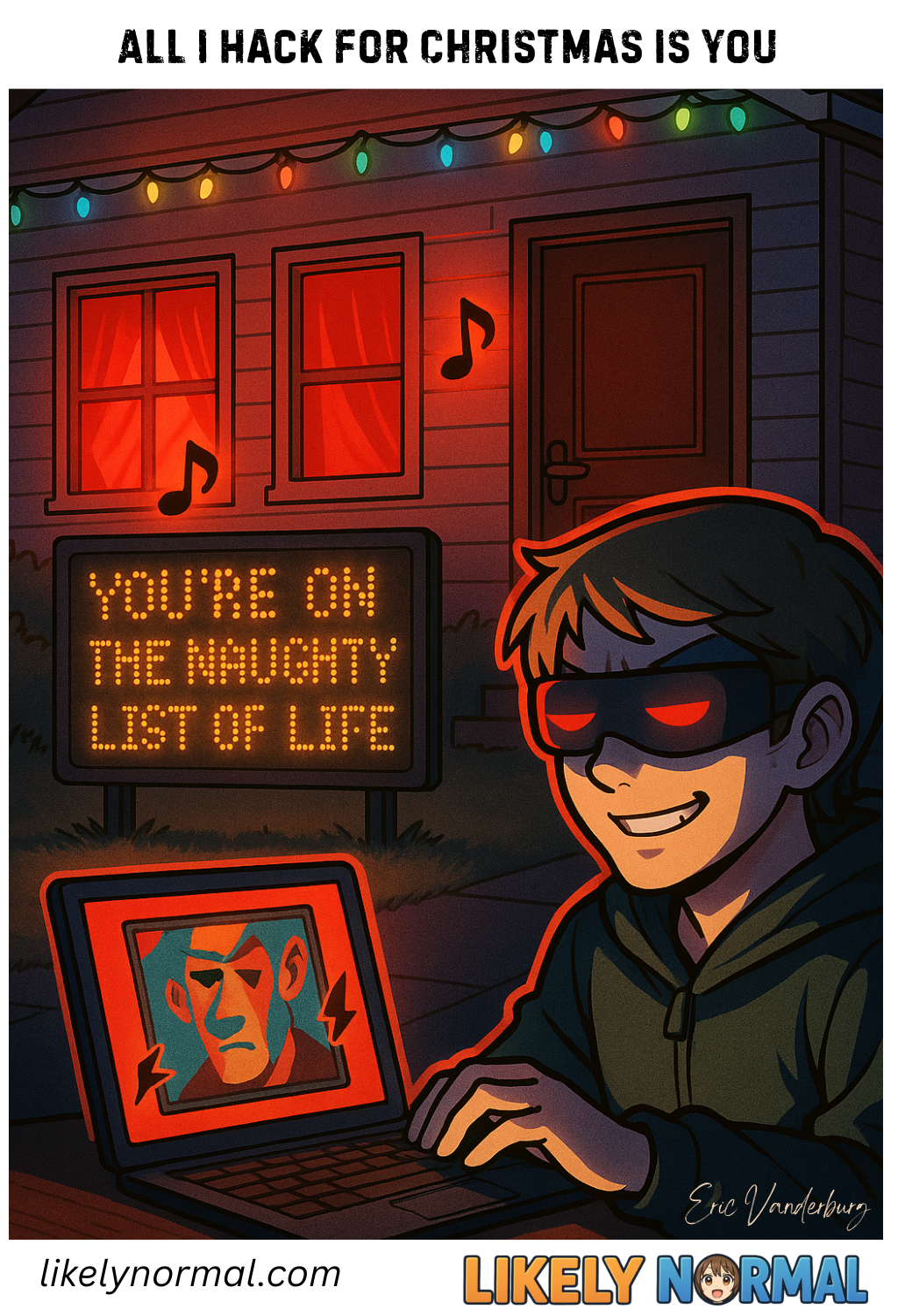
All I Hack for Christmas is You: Physical and Digital Crime Differences
In the physical world, crime tends to be an intimate affair – your cousin borrows your power tools forever, your ex mysteriously drains your joint Netflix account, and your neighbor’s cat stages a hostile takeover of your patio furniture. If someone’s going to rob you blind, at least they’ll usually have the decency to do it face-to-face after sharing a meal. But cybercrime operates by entirely different rules – a faceless free-for-all where your digital assailant could be a teenager in a basement halfway across the world or an AI bot that’s decided your life savings look tasty.
The irony is delicious: we spend our childhoods being warned about strangers, only to grow up and discover that in the digital realm, it’s complete randos who pose the real threat. That Nigerian prince emailing about your inheritance? Never met you. The hacker holding your vacation photos ransom? Couldn’t pick you out of a lineup. The romance scammer declaring undying love after three messages? Probably a stock photo with a voice modulator. Meanwhile, back in reality, you’re still side-eyeing your brother-in-law because he “accidentally” walked off with your favorite grill tongs last summer.
There’s something almost refreshing about cybercriminals’ impersonal approach – no messy emotions, no awkward family gatherings where you have to pretend not to notice Uncle Tom wearing your missing watch. Just pure, efficient digital larceny. Of course, this cold professionalism comes with its own horrors, like discovering your entire identity has been packaged and sold on the dark web by someone who’s never even shared a meme with you.
At least when your real-life acquaintances screw you over, you get the satisfaction of dramatic confrontations and passive-aggressive group texts. When a cybercriminal drains your bank account, you don’t even get the dignity of knowing what they look like – just an email receipt for their $500 Steam gift card shopping spree and the crushing realization that your password shouldn’t have been “password123.”
Discussion ¬